Tuesday, February 12, 2019

Exploring Online Lessons

Oh, the weather outside is frightful -
But the fire is so delightful -
And since we've no place to go -
Let's do an online voice lesson! (With apologies to Sammy Cahn)

****

Yesterday, the college where I teach opened two hours late. And then 4 hours late. At which point I said, "I'll bet you they're going to close early. And no one is going to come in during the time they are open.... do I really want to drive in for maybe one student?" The answer was no. So I elected to cancel people; and within minutes, people who hadn't read my email -- what is with kids and not reading emails? -- were cancelling. And mid-afternoon, I received the text message I expected to get: The school was closing at 5, which would've sent me back home in a driving sleet at rush hour. This would've made me cranky.

So today, I elected not to go in either. It was icy in the morning, and projected to rain all day with temperatures just hovering above freezing. And I had students to teach at home. One of whom asked for a Skype lesson.

And I gave her a Skype lesson, and it wasn't perfect - I still have some technical challenges ahead of me, and I'm going to explore Zoom as a platform - but man, was it valuable.

I couldn't play for her while she was singing. There's a delay. Not a big deal for vocalises, but more of a snafu for repertoire. And the sound is still a work in progress. But because I wasn't playing, I was watching. And I was seeing things that I can't see while I'm playing because, well, I'm busy playing. I can't see that your mouth position isn't the same on your /oʊ/ vowel as it is on /aʊ/.* It was invaluable.

Until I get a handle on the platform, I'm not going to start making online lessons a regular part of my services. BUT - if you can't make your lesson one week because your ride has fallen through, we can do a lesson online. And who knows what we'll see. Hopefully it will be something we can address when you are standing in front of me. And maybe we need to bring in a pianist from time to time to play while I watch. Or maybe I need to do more with Appcompanist (once you know your pieces cold) so that I can just sit back and really look at you.

We need not cancel - we have so many options available to us now!

*International Phonetic Alphabet - coming to a studio page Facebook Live near you this summer.

Sunday, September 2, 2018

Ch-ch-ch-changes - Welcome to Mezzoid: The Voice Studio of Christine Thomas-O'Meally!

Longer ago than I want to admit, I was in a choir at the Basilica of the National Shrine of the Immaculate Conception as a paid alto chorister. For those of you who aren't that well-versed (no pun intended) in choral music, mezzos usually sing alto in choirs. This is due to tessitura, rather than range. I'm more comfortable as an alto 1 than alto 2, but definitely not comfortable in S2.

Our conductor, Leo Nestor, was working through a piece, and turned to us and said, "Okay, altoids, let's go over this part," and I said, "Excuse me, but I happen to be a mezzoid." He said "What's the difference?" I said, "I'm still curiously strong, but I sing a minor third higher." (Cue music nerd laughter.)

Since that time, I've gone by mezzoid as an email address, first with AOL (in 1996!), then with wi.rr.com, and for the last 10+ years, with gmail. Then I got a website mezzoid.com, and then a personalized license plate (first in WI, now in MD). It's been my brand. When I check into conferences and workshops around the country, people recognize me from my posts on the now-defunct Vocalist bulletin board and other places.

So I have officially changed my studio name to Mezzoid: The Voice Studio of Christine Thomas-O'Meally (and I've changed the URL to MezzoidStudio). I commissioned a logo (below). I've updated my website and included Mezzoid as part of my identity.  I changed the URL of this blog from omeallystudio to mezzoidstudio.


New studio polices will be "dropped" on Tuesday, September 4, with some clarification of things to expect - from me to you and from you to me. Lots of ch-ch-changes ahead! And this is a good thing, as Martha Stewart would say.

Saturday, August 25, 2018

How Would You Want to be Introduced?

Today I went to the Women in Theatre Conference: Empowerment and Connection. It was incredibly empowering and I felt a real connection to the other participants (so I guess it was a successful conference). And something happened right at the very beginning that really struck a chord with me.

A few weeks ago, I listened to a podcast on branding yourself done by my friend Megan Ihnen. In that, she asks you to identify characteristics that you see in yourself and that your audiences see in you (this could apply not only to performers, but to teachers/students or businesspeople/clients). And then think of how you would introduce yourself to people - and then how you'd like to be introduced by people.

The first person to speak at today's conference was the Dean of the Arts and Humanities Division at Howard Community College, Valerie Lash. Although I am about to start my 6th year at HCC, I've never actually met Ms. Lash before. I have heard that she's a force of nature, however, and apparently, this must be the case, because her introduction included these two words:

Indomitable
Tenacious

These are such unique words to describe someone.

Indomitable: impossible to subdue or defeat.
Tenacious: persistent, determined, dogged, strong-willed, tireless, indefatigable, resolute, patient, unflagging, staunch, steadfast, untiring, unwavering, unswerving, unshakable, unyielding, insistent (I couldn't limit myself to just one word).

I didn't know Valerie Lash at all up to this conference. But now, based on those adjectives, I really want to know her better. 

This is how I want to be introduced, both by myself and by someone else:
  • I am Christine Thomas-O’Meally, and I am a singer who helps people find their voices, either by listening to what I’m singing or by teaching them to sing. 
  • This is Christine. She has made a difference in so many people’s lives with her singing and teaching.
How do you want to be described?

Monday, August 20, 2018

Pomodoro Technique

I'm working on becoming more productive. This summer has been a particularly terrific one for me - I learned 6 new pieces. Well, actually 3, but they were in two different languages. One set was in English, the second in Irish Gaelic, in which I've never sung before. I organized my practice time well, but I think I could do better. 
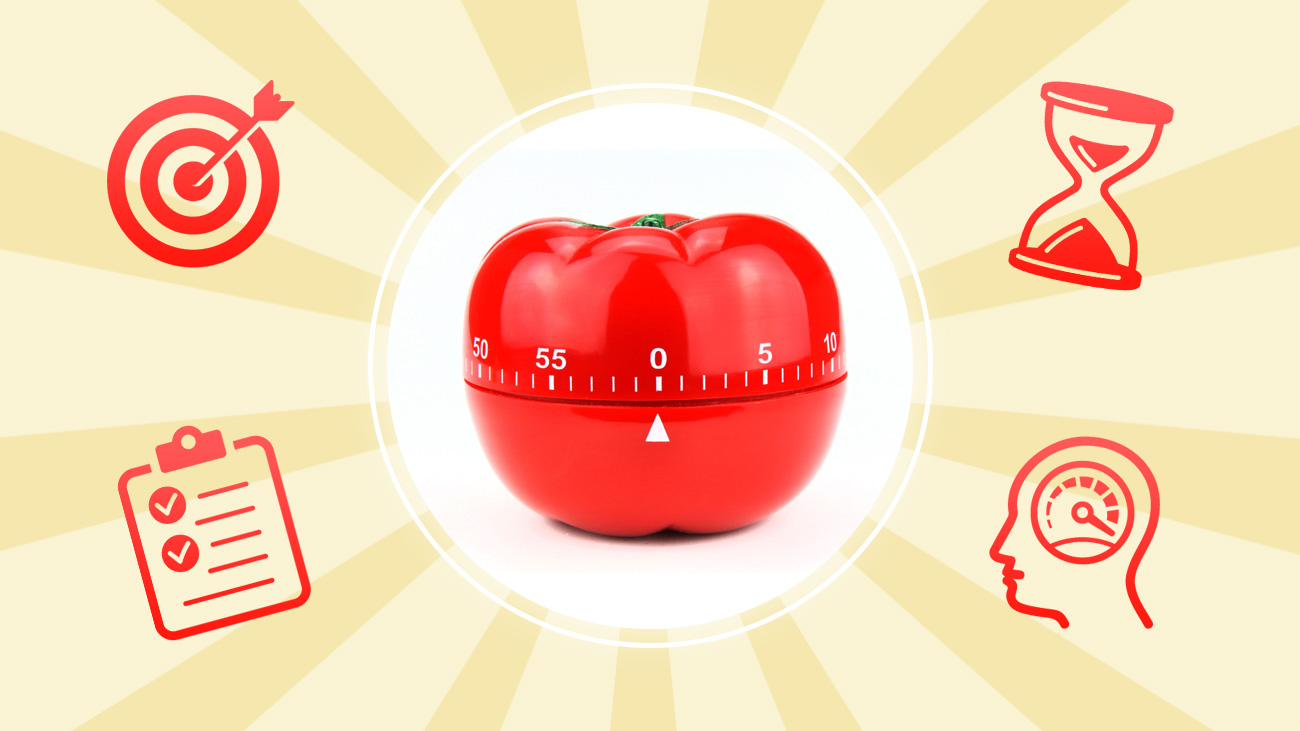
Today I read about the Pomodoro Technique, which was named after a Pomodoro Timer used by the creator to keep track of time. 

There are six steps in the original technique, found in this article in Lifehacker:
  1. Decide on the task to be done.
  2. Set the pomodoro timer (traditionally to 25 minutes).
  3. Work on the task.
  4. End work when the timer rings and put a checkmark on a piece of paper.
  5. If you have fewer than four checkmarks, take a short break (3–5 minutes), then go to step 2.
  6. After four pomodoros, take a longer break (15–30 minutes), reset your checkmark count to zero, then go to step 1.
The stages of planning, tracking, recording, processing and visualizing are fundamental to the technique. In the planning phase, tasks are prioritized by recording them in a "To Do Today" list. This enables users to estimate the effort tasks require. As pomodoros are completed, they are recorded, adding to a sense of accomplishment and providing raw data for subsequent self-observation and improvement.
So, how can we use this for practicing? And do you need a timer shaped like a tomato? 
We all have timers. On our phone, on the microwave, everywhere. Maybe you don't have 25 minutes in a row. Maybe you have ten minutes to do vocalises. Set the timer for ten minutes. Then do what else you need to do. Then go back and work on one song, and really focus on it for another ten minutes.
Another great source for time management, specifically for singers, is a podcast by a friend of mine, Megan Ihnen. It's called Studio Class. The episode I listened to today was about "Diva Metrics," and one of the things that really struck me was the idea of the Ten Minute Meeting. (Podcast also available on iTunes.)
Check it out and see what works for you. I'm going to start with the Ten Minute Meeting tomorrow morning and then do things later with the Pomodoro Technique.

There's a lot to do before the fall semester begins! (Studio policies come to mind first!)

Friday, August 17, 2018

Ringing vs. Wringing (in Singing and Business)

I receive daily email updates from marketing guru Seth Godin, which have been inspiring me to make some changes in the way I approach my studio management. This morning's advice resonated with me in a way that transcended business. It was:

Ringing vs wringing

Ringing is resonant. A small force causes sympathetic vibrations, and magic happens.
Wringing requires significant effort and can even destroy the object it is applied to.
When you ring a bell for your clients, you’ve delivered with care and empathy.
But when you seek to wring every dollar out of a transaction, you’ve probably engaged for the last time
Of course, we talk about resonance in singing, which is frequently called "ring" (or "ping" or "edge" or "focus," but I like ring).

Ringing, in singing, is resonant. And when you engage things properly to cause sympathetic vibrations, magic happens.

Wringing, in singing, is manipulation and artificiality. You're doing something contrived and unnatural and it will, ultimately, affect your technique negatively.

When you sing in a ringing tone for your audience, you are delivering your message with clarity and in a way that is pleasing and moving.

But when you seek to wring every last overtone out of a note, you are singing with too much pressure and force, and you are not engaging your audience.

So when we work on a resonant sound, work on finding balance and freedom to create clarity and magic. I'm working on new vocalise sheets, which I will distribute at the beginning of the fall semester (post-Labor Day), and we can go over any exercises with which you're not familiar. 

Wednesday, July 4, 2018

Appcompanist - This is HUGE

When I go to exhibits at conferences (vocal or otherwise), I stop at booths (especially if they are offering something free, preferably of the food nature) and I have several standard responses to the things they're selling:
  • That's really interesting! I'm about to go to [insert title of session here] now. But I'll be back later to look at this a little further. Thank you!
  • This looks terrific. But I've made a pact not to buy any more books until I've read the ones I have. Thank you for this, though!
  • Looks like you've put a lot of work into this. Wow.
  • Huh. Interesting. 
  • These cookies are really good!
  • [Smile through a mouthful of cookies and run when the exhibitor's back is turned]
I went to the Appcompanist booth and saw a friend of mine standing there slack-jawed, watching the pitch of founder Darin Adams. That's not his usual look. I came in on the end of it and my friend asked a few more questions and then he left. Darin started his pitch from the beginning and I became slack-jawed. And then I responded with a phrase I've never used at a exhibit before:

HOLY CRAP THIS IS 
LIFE-CHANGING!

And then the next day, I went to Darin's presentation on the final day of the conference. And my mind was blown again.

Appcompanist is not intended to replace a pianist. Despite Will Zellhofer's dejected response to my FB post of, "I saw Terminator. I know how this ends," it is intended as a tool. 

Appcompanist has done pretty much what I've been doing in the studio when people need accompaniments for practice or auditions when there's no pianist - recording on my Clavinova onto a flash drive inserted into the USB, usually while the singer is singing, so the accompaniment is timed perfectly to their desired tempo, their breaths, and whatever rubato (or lack thereof) they plan to take. The difference is that the accompaniment recording can be manipulated to your future needs.

Want it faster? Slower? Do you need it in a different key? Do you want to take a fermata somewhere? Bring out the melody while you're practicing? Create a cut for an audition? Open that cut up? Do you want to create playlists for different purposes (mine are "student repertoire" and "songs for MEEEEE")? You can do all that.

There are thousands and thousands of songs available in both classical and musical theater (not sure about pop yet). You can subscribe on a monthly basis to either library at $11.99 or to both for $14.99 or do what I did and spring for a yearly membership ($149). Yeah, it sounds pricey, but it's working for me. I've got an audition in a few weeks and I'm rehearsing with a couple of pieces and it's really making practicing easy. (I am going to write to them about the end of "O rest in the Lord." There's a mistake that I can work around, but they should fix it.)

At the very least, I'm going to be using it in lessons from time to time. Especially when we're working on pieces that are ready to go out so you can hear all of the notes, and not only the ones I can play.

Check it out. The technology is amazing! (And no, I'm not getting any kind of kickback from them. Dammit.)

Tuesday, July 3, 2018

No one even breathed...

Last week at NATS, I saw a recital by the great opera singers Christine Brewer and Stephanie Blythe, accompanied by the amazing Craig Terry. Christine Brewer is a Wagnerian soprano, Stephanie Blythe a dramatic mezzo-soprano, and combined, their voices could knock you out of your seat (I can vouch for this because I was in the 3rd row). Craig Terry is a joybomb. Everything he did, both as a collaborative pianist and as a clinician, was full of joy and support for whoever he was working with. I shared with him as he was passing me, "Mr. Terry, I just wanted to tell you that you absolutely exude joy in everything you do." He stopped and said "Thank you!" and then held his hand out and said, "I'm Craig." (Yeah, I kinda knew that.) I shook his hand and said, "I'm Christine."

But there was a moment in the second half where Stephanie Blythe sang a song from her Kate Smith tribute show that was particularly special. The song, "The White Cliffs of Dover," was written at the height of WWII. She brought that enormous voice down to a silvery thread - so controlled, so perfect - and no one... even... breathed. No one moved. (Of course, that was when my right calf began to itch like crazy - I very carefully used my right foot to scratch it, feeling like a complete Philistine.)

It's hard for a YouTube video to capture the perfection of this moment, but I found one from a few years ago, with Stephanie Blythe and Craig Terry in concert. Enjoy.