Saturday, November 18, 2017

Why a Bachelor's Degree?

A former student asked me to write a letter for a friend who was being threatened with deportation (!!) while doing a degree program in music. This person wants to be a voice teacher, and apparently TIIC don't understand why that career choice requires any kind of formal training. (Slowly I turn...) So I wrote this today:

To whom it may concern:
I was asked to write this letter to explain why teaching voice is something that would require a Bachelor’s Degree in Music. I cannot imagine how anyone would think it would not require extensive training at the collegiate level and beyond. Teaching voice is not just sitting at the piano and playing happy little ditties or simple scales. It involves an understanding of many facets of music and other disciplines. I would like to outline these requirements as I see them, as a graduate of the Peabody Institute of Johns Hopkins University, as a private and college voice teacher/sole proprietor with nearly 20 years’ experience, and as a member of the National Association of Teachers of Singing (NATS).

• The voice teacher needs to understand the physiology of the voice - the laryngeal muscles, the muscles of breath management, and the musculoskeletal structure that allows a singer to develop his/her instrument to full effect. This study is offered in vocal pedagogy courses in both undergraduate and graduate programs.

• The voice teacher needs to understand music theory in order to convey to the student that the vocal line is only a part of the whole fabric of the piece. Knowing theory allows the teacher to show the student how each note, each phrase, each line fits into the entire piece. This study is offered in every year of the bachelor’s program.

• The voice teacher needs to understand history - both music history and world history - in order to teach the student how to interpret a piece of music in a way that is historically informed and appropriate. The style of a piece from the 17th century is radically different from that of the 19th century. And many times, styles recur in later periods (i.e., everything old is new again). A good teacher will be able to point this out to a student and help guide that student to an understanding that is deeper than just singing a song for the song’s sake. Again, music history is offered throughout a 4-year undergraduate program, as well as the gen ed courses in history available in most colleges.

• And finally, the voice teacher cannot exist in a vacuum. Music programs at both the undergraduate and graduate levels allow (and usually require) people to work together in various ensembles, on stage, in concert, in chamber works, and in large choral groups. These experiences are invaluable in teaching the voice teacher about teamwork, in providing networking opportunities that go well beyond their college years, and giving them a foundation to draw upon when working with students.

Based on my experience, all of these skills require, at a minimum, a bachelor’s degree in music. Should you have any further questions, please feel free to email me at mezzoid@gmail.com or call the number below.

Sincerely yours,

Christine Thomas-O’Meally, M.M.


Tuesday, August 22, 2017

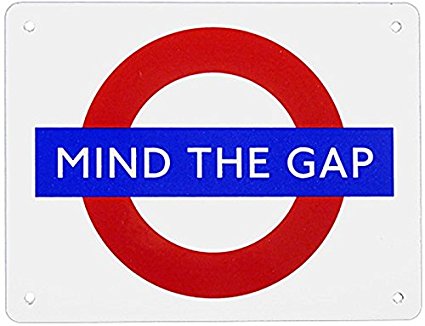
Mind the Gap


This morning's meditation again asked me to draw attention to the momentary gap between inhalation and exhalation (and vice versa). Although I reject the concept of suspension when it comes to teaching breath management, as I have discussed before, I do understand the value of taking a moment to reflect.

In England, there is an announcement at the underground (subway) for travelers to "mind the gap." This pertains to the space between the edge of the platform and the train.

In the phrase shown above, the late composer Truman Fisher says that "the pause is as important as the note." This goes along with the concept that I teach - the high note is only as good as the note before it. You have to be grounded on that note in order for the one after it to be successful - and if there is no note, you have to be grounded in the rest. A musical rest can be significant for expression's sake (much can be said when nothing is said), for grammatical purposes, or for preparation.

Sometimes I am so busy, particularly at the end of the semester (which always seems to involve academic, musical and personal commitments), that I don't take any time to breathe. I'm hoping that my newfound commitment to daily meditation will help me identify when I can find those moments, no matter how insignificant an amount of time they may be, and use them accordingly to find the time to reflect, to refresh, and to re-engage.

This semester, I'm going to try to


Thursday, August 17, 2017

Home should be where the heart is

I am sitting on my bed in the Journeyman Hotel (a Kimpton Hotel) in The Third Ward of Milwaukee. Bill is on his computer and Pippin is between us. It's pretty much like any other morning except that we are in Milwaukee. Again.

We're here for Milwaukee Irish Fest, the world's largest Irish Music Festival. We are staying at a brand new hotel that is blocks from the festival grounds, so that we can walk to and from, take Pippin for walks as needed, eat non-festival food at one of the many decent restaurants in the area, and not have to worry about logistics. The hotel is a little pricey, but it's dog-friendly, so I didn't have to worry about boarding Pippin or getting a housesitter, so it balances out.

Last night we sat in the rooftop bar and had drinks with anyone who wanted to come by. I had created an event and invited people. There were about 10 people there, one former neighbor, one fellow teacher, one fellow singer and 4 people from HS. No other musical colleagues. No students. 

I think this is my last trip to Milwaukee. I don't feel anything when I come here. There are so many places I haven't seen - the Pacific Northwest, New England, South Carolina - and I'd like to go back to Ireland. I think it's time to cut all my ties with this city.  

I have a lesson scheduled with Connie today, and I'm singing at the Unity Church on Sunday. I'm supposed to have another lesson with her on Saturday and rehearse with the band on Saturday afternoon. Not sure if I will do the Saturday lesson. I don't think I'm going to do any more singing in this city after this point. 

It's time. I may have been born here, but this is not, and has never been, home. 

Home should be where the heart is.
Never were words so true.
My heart's far - far away.
Home is too.

Here's an interesting article a fellow expat wrote upon his exit from MKE. 

Sunday, August 13, 2017

Attend the Tale of Lea DeLaria

I had the great fortune of going to see Lea DeLaria at Blues Alley in DC last night.

[quick aside - why on earth are women with beautiful Italian names pronouncing them so Americanized? Lea DeL/ae/ria --- Laura Ben/ae/nti? Seriously, folks, people would be able to wrap their mouths around the taller /a/ vowel without any problem; pronounce your names the way they're intended]

I have seen Lea DeLaria on TV since the 1990s, when she started doing stand-up as the first openly lesbian comic on late night and cable TV programs. And then I saw that she was doing Broadway, doing roles like Hildy in On the Town (with Jesse Tyler Ferguson as her love interest) and Eddie/Dr. Scott in Rocky Horror Picture Show. 

But my fascination with Lea DeLaria came when she played the psychic Madame Delphina on One Life to Live. OLTL was a bizarre soap - it used a lot of New York actors (who were often doing double duty in roles on Broadway) and was much more socially conscious than your average soap. Yes, there were people returning from the dead, evil twins, multiple personalities, etc., but there were also storylines about equal marriage and antiwar sentiments. It was quirky. And then she played a drag role, Professor Del Fina (you see what they did there?). As Delphina, she would hear voices and randomly turn around and converse with them, usually in a somewhat irritated fashion.

Of course, since then I've seen her in things like Orange is the New Black, where she plays Boo.

It was an amazing show. She's raunchy. Very raunchy. But her voice is capable of so much inflection. She can purr, she can growl, she can yell, she can croon.

I thought of Barbara Cook last night, even though vocally they could not be more different. Lea's carrying on the tradition. She's still telling the story, she's true to the text, she's authentic. There are still people out there who can tell the tales.


Thursday, August 10, 2017

Suspending the breath - why I don't teach it

This morning, the subject of my meditation app involved a lot of focus on the suspension/stillness between inhalation and exhalation. The momentary pause that exists both before the initiation of each. It's infinitesimal and you really have to be aware to notice it even exists.

I don't really feel it and I don't find it all that valuable. When I first started studying voice, I was giving vocalises that encouraged finding that suspension. Exercises that consisted of:

Inhale - 2 - 3 - 4
Suspend 2 - 3 - 4
Exhale 2 - 3 - 4

The exercise gradually increased the numbers, cautioning the singer to be aware of maintaining an open glottis rather than shutting down or being rigid during the suspension. I dutifully did this exercise, and then I taught it, when I first started teaching voice. Because that's what you did. It was a basic vocal exercise that was included in all the pedagogy books.

But I feel as though breath is a continuous process and that to focus on what is a nearly imperceptible stopping of time creates unnecessary tension. In fact, I think that the act of extending the suspension beyond that split second reinforces the idea of "setting the breath," as opposed to just moving through it.

I have written in the past that my approach to the breath is that of:

Release - Receive
Release - Resist

Rather than suspend time, I prefer to think of releasing it and welcoming the next moment. 

(The point of the meditation was to be aware of stillness and use it in your life to avoid unnecessary conflict. In that case, it's a useful concept. But I'm writing a singing blog here....)

When I'm singing, I don't want to suspend animation, to enter into some kind of momentary vocal hibernation, but to continue to be animated, which is defined as being "full of life." 

So I'll suspend disbelief (or judgment), I'll keep people in suspense, I'll do TRW suspension work at the gym, and I'll milk a good harmonic suspension for all it's worth. But when it comes to singing, I'm just going to keep the air flowing. 


Wednesday, August 9, 2017

Thank you, Barbara Cook

[To Terry Gross on FRESH AIR]"When I'm standing in the wings, waiting to go on, I kind of plant my feet and feel a kind of strength coming up from the ground into me. And then I think about giving back this gift that I have been given. And when I do that, then I get out of ego so much. And then I don't worry so much about what people think about how I sing or how I look. And I just try to sing more deeply and more personally. And I really enjoy that. I love singing. I do. I get rid of so much stuff by singing. It's a wonderful thing to be able to do." 


Barbara Cook, 1927-2017

And here's a recording of her at nearly 80 (picture below to the contrary). The voice stayed fresh (one may quibble about certain closed vowels sounding reedy, but my contention is that those vowels sounded reedy back in the 1950s and that's a whole 'nother thing).


She never learned to read music (to which I always say, "and why not?"), which makes her learning the role of Cunegonde in Candide even more mind-boggling. Her career stalled due to alcoholism and obesity, but she reinvented herself and gave back as both a performer and a clinician. 

I've always said I want to be Barbara Cook when I grow up. Maybe I still have a shot.

Monday, August 7, 2017

Milton Peckarsky, 1920-2017


I'm not sure exactly when I met Milton Peckarsky. It was probably around 1997, a year or so after I arrived in Milwaukee. I think I had sung on a MacDowell Club Concert, and he approached me to ask if I would be interested in exploring some contemporary music.

I had done a little contemporary music up to that point - I'd been in the world premiere of The Dream of Valentino at Washington Opera (before they added the word "National" to their name) and I had done the Elizabeth Vercoe "Jehanne de Lorraine" at a concert at Marquette University, but I didn't really consider myself a contemporary musician. That stuff was hard.

Well, that all changed, and for the next 10 years or so, I was pretty much known as a contemporary musician because of Milton. He introduced me to composers such as Yehuda Yannay, Josh Schmidt, Sigmund Snopek III, David Bohn, Keith Carpenter, and Cornel Taranu. Because of him, I received amazing reviews for a piece that Yehuda wrote (not for me, but which I performed) as well as for pieces by Alban Berg. These were performed on a concert called Variety 2000: Expressionism and Surrealism - The Soul Turned Inside Out. THREE HOURS of music, film and theater (including pornographic puppet theater) celebrating what could be described as pre-emo navel contemplating (it was a real toe-tapper, as you can imagine). There were 6 performances of it and every single performance was sold out. These were on the Music Of Our Time series, which he had founded.

He also commissioned Schmidt, Snopek, Bohn and Carpenter to write pieces for the two of us to do together at a MacDowell Club recital at his home.

Milton also arranged for me to sing the Tzara Songs by Cornel Taranu, which were then recorded for a collection of Romanian music. The songs were based on the poetry of Dadaist poet Tristan Tzara and were not easy, either musically or interpretatively (cheminée, cheminée, les rois des poissons passé: Chimneys, chimneys, the kings of past fish). Listening to them as I write this - I am really proud of these pieces and would like to sing them again.... maybe with slightly better French....

He and his wife Vivian (who I just found out passed away 3 years ago) were also like second parents to me. They came to my wedding (and in fact, my mother-in-law apparently thought Vivian was my mother and embraced her warmly, much to the consternation of my own mother).

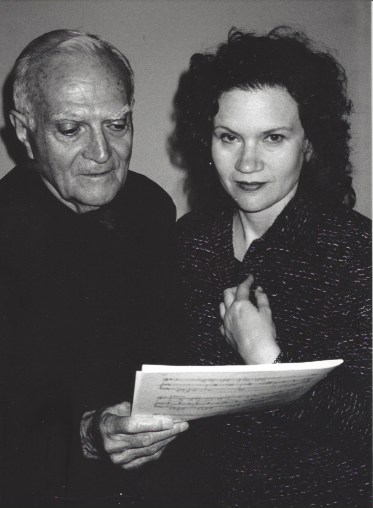
The pictures above accompanied a press release for an October 2000 concert called "Journeys," which Milton and I did at Carroll College (now Carroll University), and included songs by Hugo Hartig, Arnold Schoenberg, Ned Rorem, Charles Ives, and Maurice Ravel, as well as my debut as a narrator in Theodor Ullman's The Love and Death of Cornet Christoph Rilke. This piece was particularly meaningful to Milton as a Jew - it was the final piece that Ullman wrote while a prisoner at the arts camp, Theresienstadt, prior to being moved to Auschwitz. As an actor, it was particularly meaningful to me, because the actor for whom it was intended had been executed on the day of its scheduled performance.

I hope I gave something back to Milton as well - one thing I did for him was to arrange for Mayor Tom Barrett to declare September 14, 2012 as Milton Peckarsky Day. Milton had just been diagnosed with Alzheimer's at that time, and the MacDowell Club wanted to honor him while he was still cognizant of the honor. Rest in peace, dearest Milton, dearest Vivian. I will never forget you.

Milton & Vivian Peckarsky